
Cooling Conveyors
Conveyors that cool hot parts on the way from the press to the container, so parts are not packed hot. Built with the cooling method that suits your parts, your rate, and the utilities in your plant.
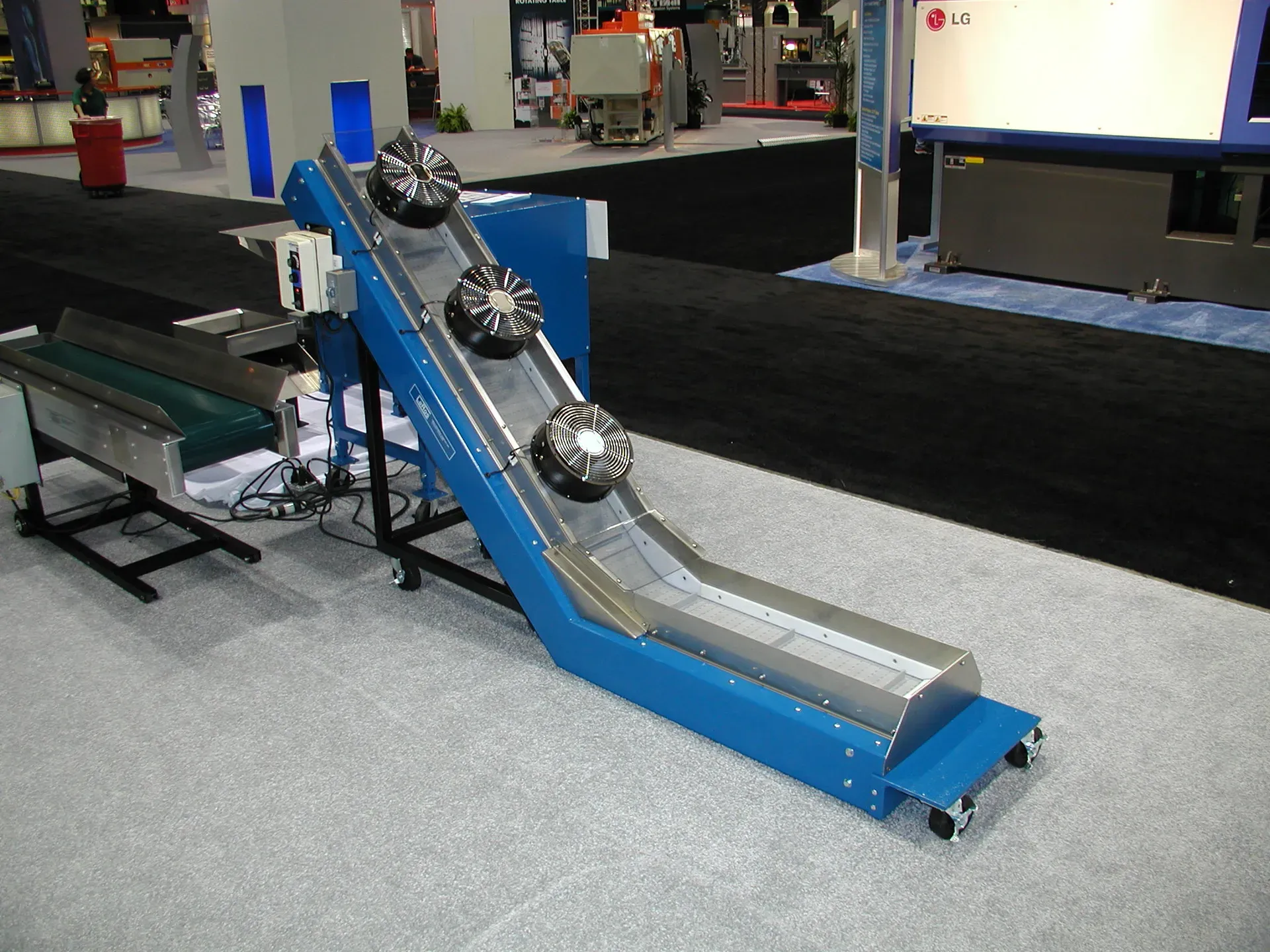
Application
Why cool parts on the conveyor
Parts leaving a molding machine or casting cell are often still hot. Packed into a container at that temperature, they can warp, stick together, or continue to shrink. A cooling conveyor gives the parts time and airflow to cool before they reach the container, the next operation, or the operator.
The cooling time is set by the length of the conveyor and the belt speed. With a variable speed drive, the belt speed can be adjusted to suit each job.
Methods
Cooling methods we build
- Fans over the belt: fans mounted above the conveyor blow air down onto the parts
- Fans under a vented modular belt: fans mounted inside the conveyor frame blow air up through an open, vented modular plastic belt and around the parts
- Spot cooler (air conditioned): a spot cooler ducts air cooled below room temperature onto the parts on the belt
- Chilled water radiator: fans move air through a radiator supplied with chilled water, delivering cooled air to the parts
- Water bath: parts are submerged in a stainless steel tank on our Water-Veyor
- Compressed air: air knives or venturi air amplifiers supplied by your shop air
Choosing a method
Comparing the cooling methods
| Fan cooled | Uses room air. The simplest method, but parts cannot be cooled below the temperature of the room. |
|---|---|
| Vented modular belt with fans | Air reaches the underside of the parts as well as the top. Uses room air. |
| Spot cooler | Delivers air below room temperature. Needs no chilled water or shop air. |
| Chilled water radiator | Delivers air below room temperature using your plant chilled water supply. |
| Water bath | Direct contact with water. For parts that can be wetted. |
| Compressed air | Air knives or venturi air amplifiers. Uses your shop air. |
Tell us about your parts and the utilities in your plant, and we will recommend the cooling method.
For your quotation
Information for your quotation
- The part and material, with a drawing or photo if available
- Part weight and the production rate or cycle time
- Part temperature leaving the press or cell, if known, and the temperature you need at the discharge
- Whether the parts can be wetted
- Utilities available at the conveyor: power, chilled water, shop air
- Floor space available and the discharge height
- For an existing LaRos conveyor, the serial number
In the shop
Cooling conveyors from our shop
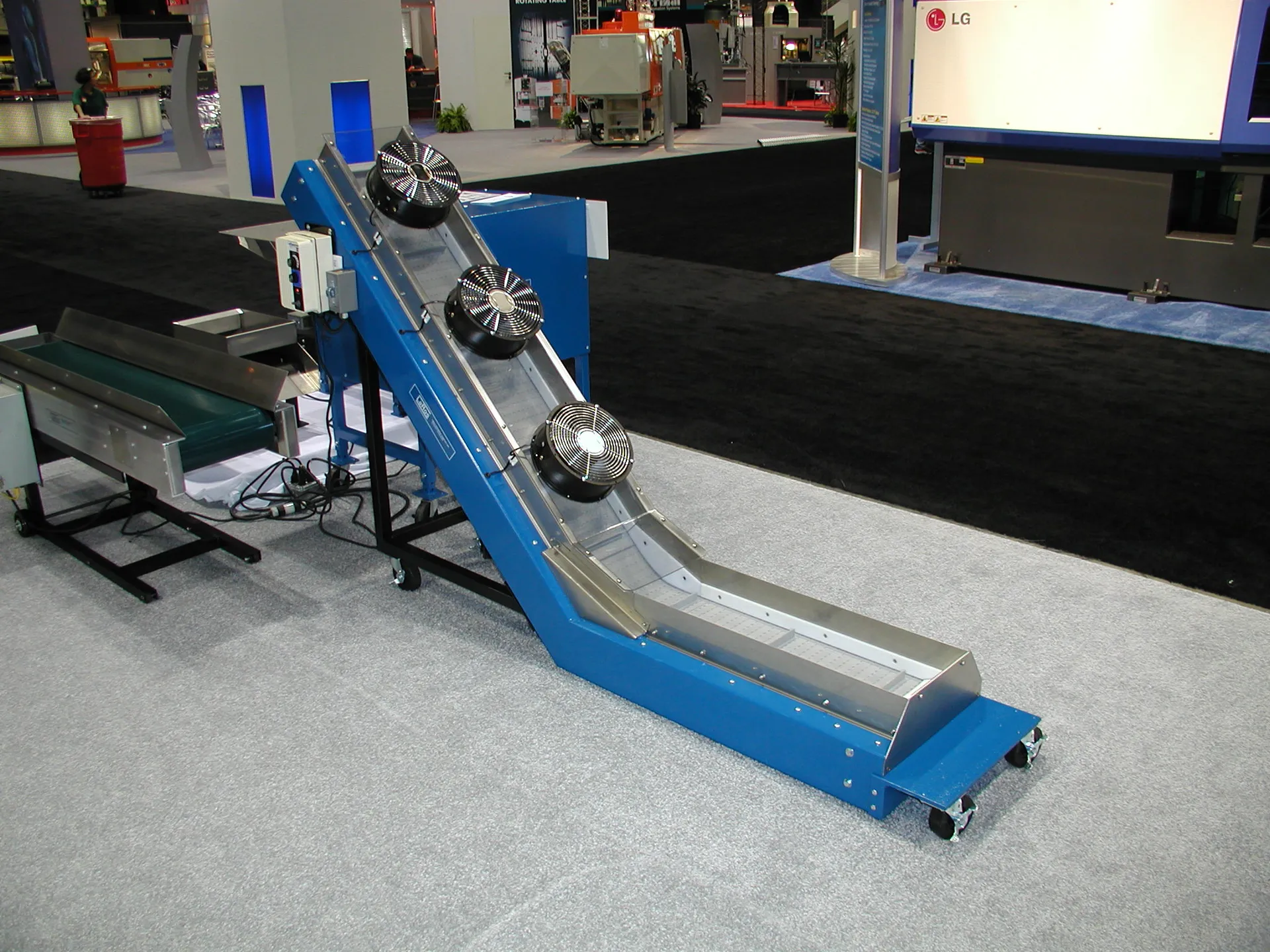
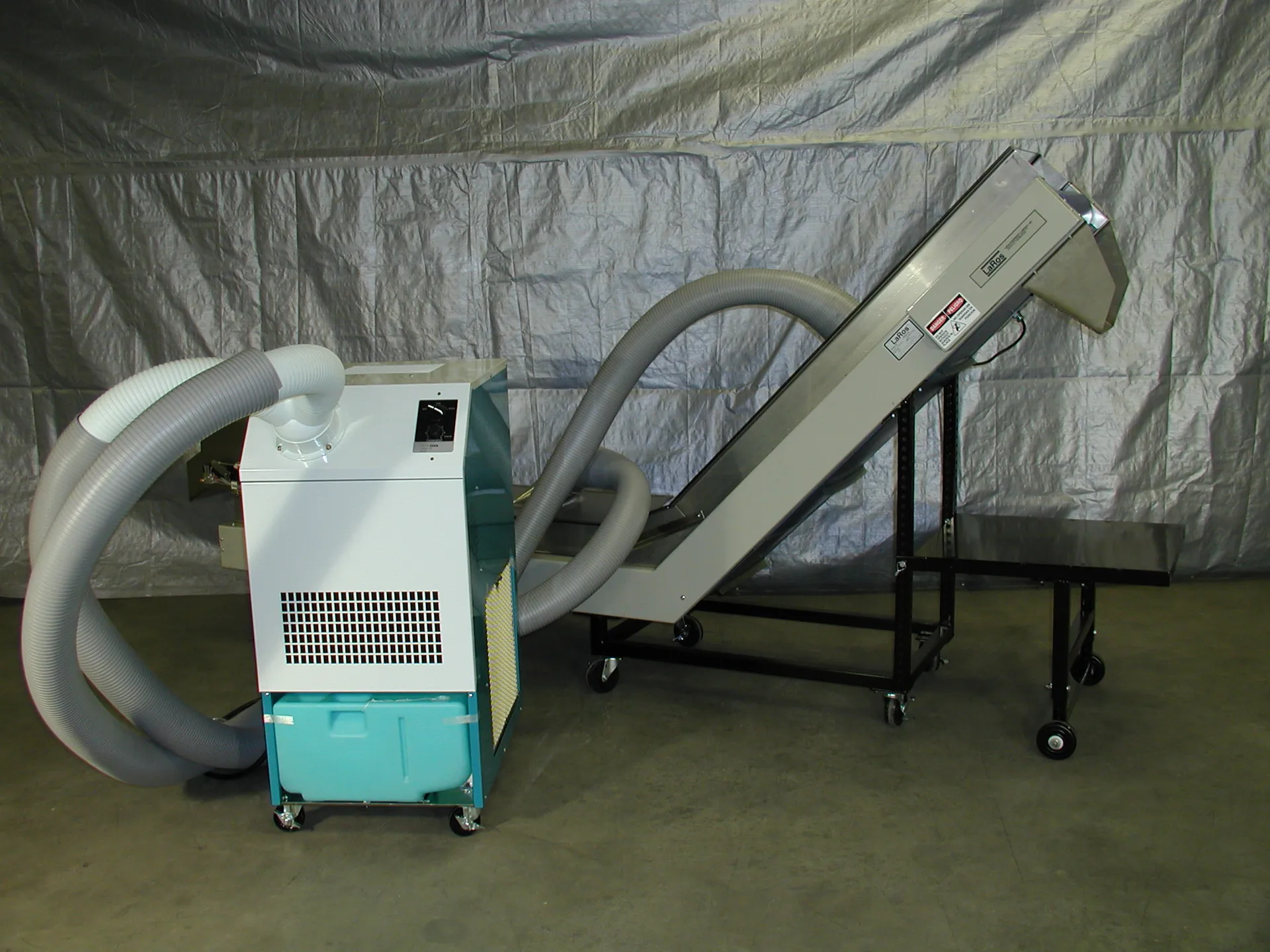
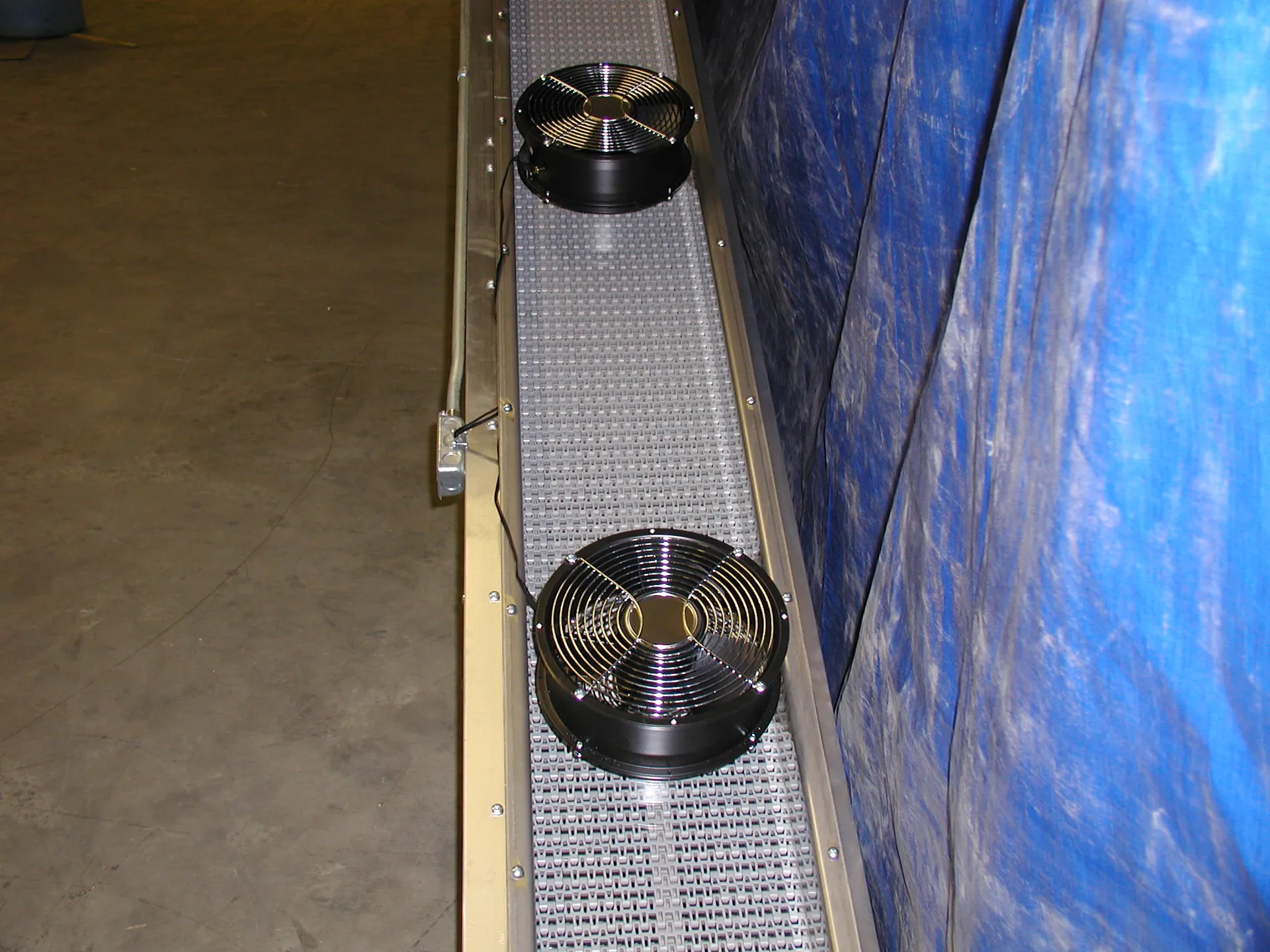
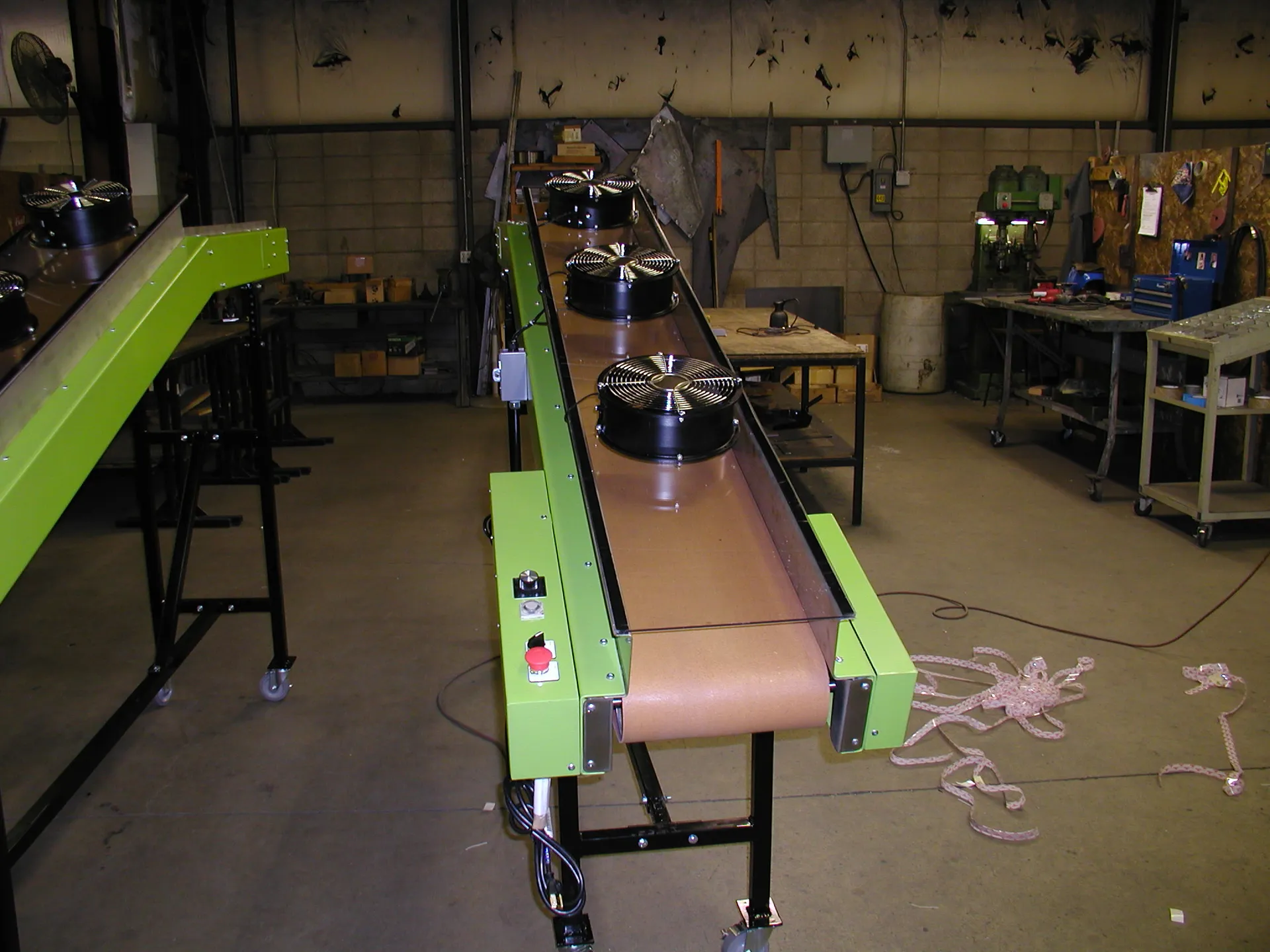
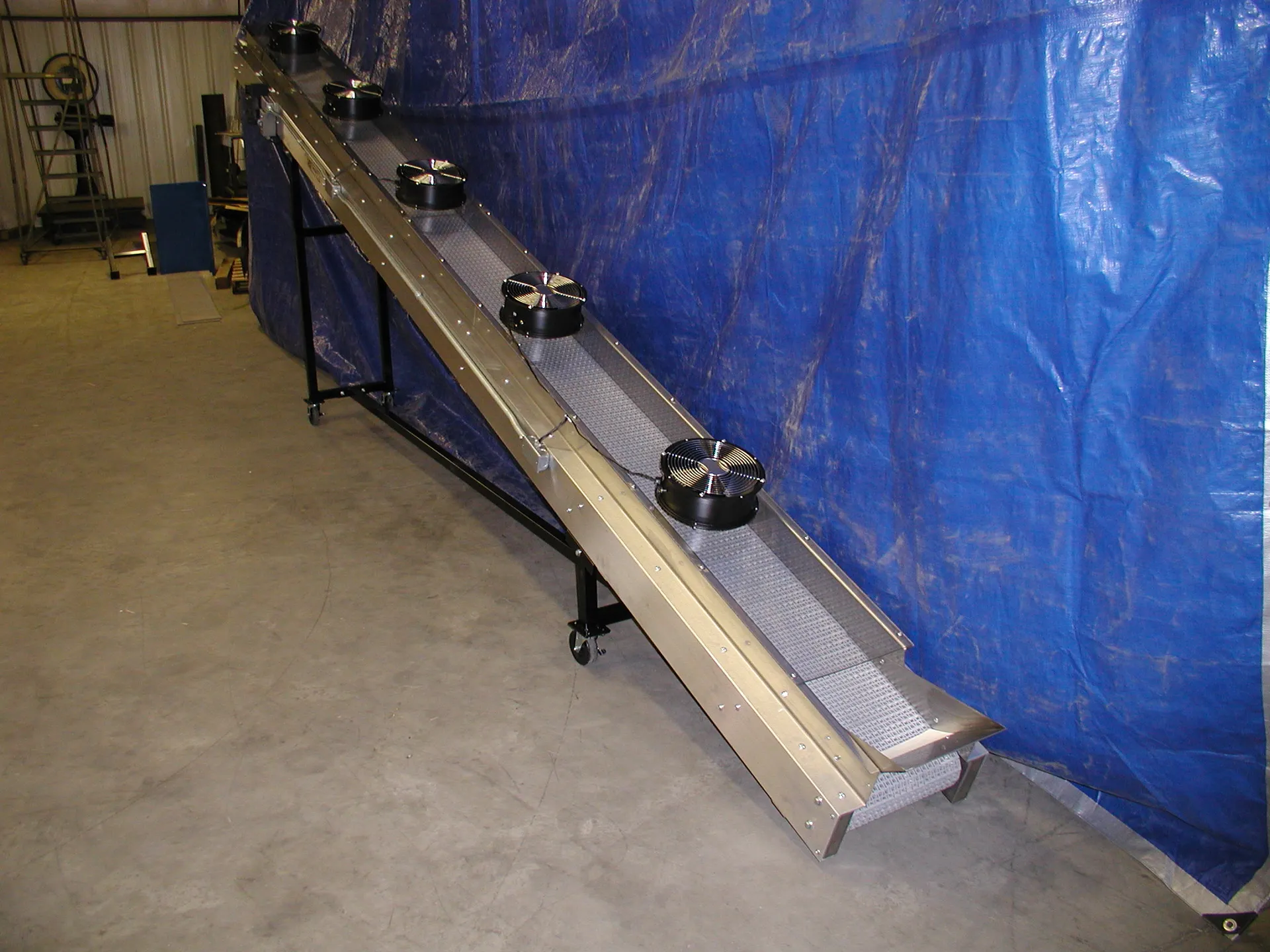
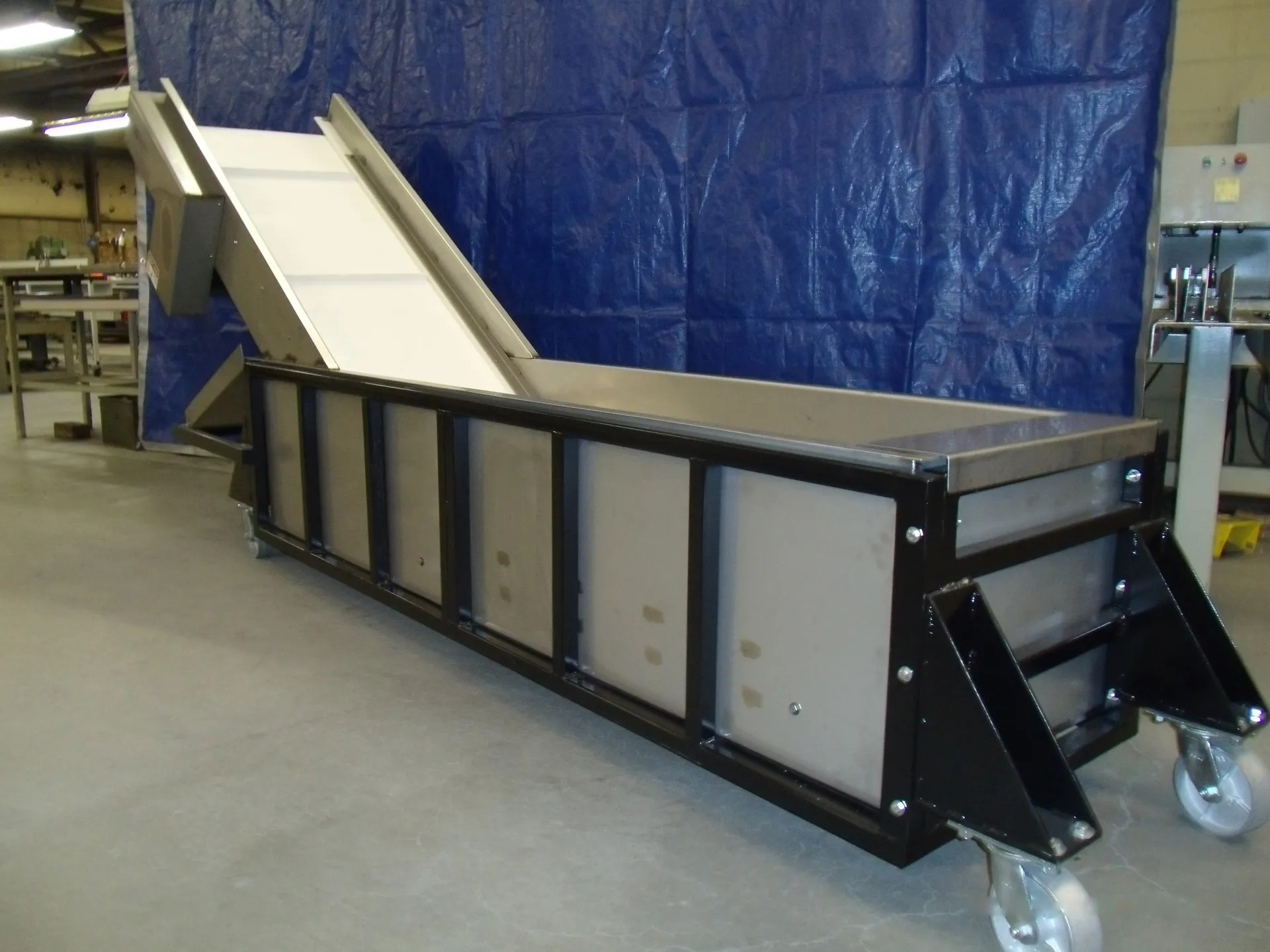
Every LaRos conveyor is built on heavy-duty frames with large crowned pulleys and enclosed drives. How LaRos conveyors are built
Available options
- Modular Belts
- Metal Detectors
- Robot Interface: Index, reverse, or stop the conveyor on signals from the robot or press.
Request a quotation
Tell us about your parts, the equipment the conveyor will serve, and the space available. We will review your application and return a drawing and a quotation. To replace or duplicate an existing LaRos unit, send us the serial number from the nameplate.